Tree Health & Disease in Bowling Green, KY
An honest read on a tree that is struggling — thinning canopy, dieback, oozing bark, early leaf drop, or a species with a known problem — and a plan that says plainly whether it can be helped or has reached the end.
Call (270) 780-3310 for a Free Estimate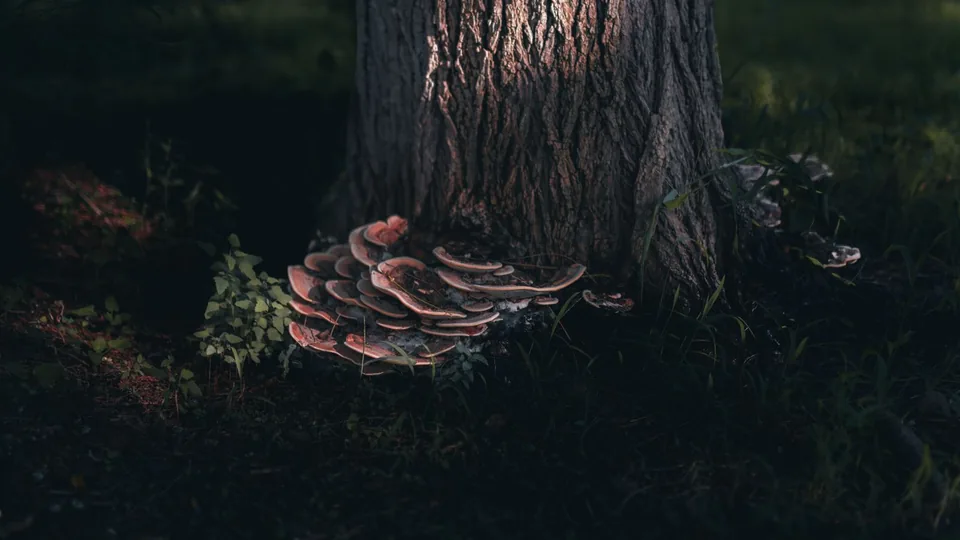
A tree in trouble usually shows it before it becomes a hazard, and catching the signs early is the difference between a treatable problem and a removal. Thinning leaves, branches dying back from the tips, undersized or off-color foliage, bark cracking or oozing, mushrooms at the base, and leaves dropping in midsummer are all a tree telling you something is wrong. The useful question is what, and whether it is the kind of thing that gets better or the kind that only goes one way.
The goal here is a diagnosis and a straight recommendation, not a treatment sold for its own sake. Some problems are cosmetic and the tree will shrug them off; some are manageable with the right care over a season or two; and some are terminal, at which point the honest move is to plan the removal before the tree becomes dangerous. Knowing which is which is the whole point of looking.
The Emerald Ash Borer
The single biggest tree-health story in this area is the emerald ash borer, an introduced insect that kills ash trees. It bores under the bark and cuts off the tree’s ability to move water and food, and once it is established in an untreated ash the decline is usually rapid and fatal. The early signs are thinning at the top of the canopy, shoots sprouting low on the trunk, D-shaped exit holes in the bark, and woodpeckers stripping bark to get at the larvae.
If an ash is still in good shape and you want to keep it, there are treatments that can protect a high-value tree, and that decision is worth making early rather than late. If an ash is already well into decline, the practical path is removal — and sooner rather than later, because dead ash turns brittle and dangerous to take down the longer it stands. Either way, the first step is an honest look at how far along the tree is.
Other Problems We See Here
Beyond ash, a handful of issues turn up regularly. Fungal leaf diseases like anthracnose disfigure and thin a canopy in wet springs but rarely kill an established tree. Cankers — sunken, dead patches on bark — and root and butt rots are more serious, because they attack the structure that holds a tree up, and a tree that is decaying at the base can be a hazard well before it looks sick from a distance. Mushrooms growing at the root flare are a sign worth taking seriously.
There are also trees whose troubles are built in. Bradford and other ornamental pears, widely planted years ago, are notorious for weak branch unions that split apart in storms as they mature — often a structural problem more than a disease, and one where pruning or removal, not a spray, is the answer. Matching the response to the actual cause is why a look beats a guess.
Roots, Soil, and Simple Care
A lot of tree decline is really root and soil trouble, and on our ground that is especially true. Thin soils over limestone give roots little depth to work with, so trees here are more sensitive to compaction, to drought in a dry summer, and to having their root zone paved, piled on, or graded. A tree going backward for no obvious disease reason is often a tree whose roots are struggling, and the fix is in the soil, not the canopy.
The everyday care that helps is unglamorous and real: a proper ring of mulch over the root zone — spread wide and kept off the trunk, never piled into a volcano against the bark — conserves moisture and protects roots, and watering deeply in a drought keeps a stressed tree going. Young trees especially benefit from steady water and light structural pruning in their first years. None of it is exotic; it is just the basics done right, and it prevents a lot of the problems that later turn into removals.
When a tree is too far gone to save, the next step is removal; when it can be kept, the right pruning is often the most useful thing you can do for it.
What’s Included
- On-site assessment of a declining, damaged, or suspect tree
- Emerald ash borer evaluation — treat-versus-remove guidance on ash
- Identification of common local diseases, cankers, and root rots
- Structural review of split-prone species like ornamental pear
- Plain guidance on mulching, watering, and root-zone care
Why It Matters in Bowling Green
Two things shape tree health around Warren County more than anything else. The first is the emerald ash borer, which has put ash trees across the county on a clock — an untreated ash is very likely a future removal, and the standing dead ones are a growing hazard. The second is the ground itself: thin soil over karst limestone leaves roots shallow and short on reserves, so local trees feel drought, compaction, and construction damage more sharply than trees on deep soil would. A lot of what looks like disease here is really a root system with too little to work with, and reading that correctly is what separates a useful plan from a wasted one.
Frequently Asked Questions
How do I know if my ash tree has emerald ash borer?
Watch the top of the canopy — it thins first — along with new shoots sprouting low on the trunk, D-shaped exit holes in the bark, and woodpeckers stripping bark to reach the larvae underneath. Once those signs are clear the tree is usually well into decline. A high-value ash caught early can sometimes be protected with treatment; one already failing is best planned for removal before it turns brittle.
My tree’s leaves are thinning and branches are dying back. Is it dying?
Maybe, maybe not — dieback and a thinning canopy are signals, not a verdict. They can come from disease, root or soil problems, drought stress, or damage, and each has a different outlook. The point of an on-site look is to find the cause and tell you honestly whether it is cosmetic, manageable, or terminal, rather than guessing from the symptoms alone.
Can a diseased tree be saved, or does it have to come out?
It depends entirely on the problem. Leaf diseases like anthracnose rarely kill an established tree; root rots and trunk decay that undermine the structure often do, and a tree failing at the base can be hazardous before it looks sick. We aim to give you a straight answer — treat, monitor, or remove — based on what the tree actually has, not on selling a treatment.
Why do my Bradford pears keep splitting apart?
That is structural, not a disease. Ornamental pears grow with tight, weak branch unions, and as they get bigger and heavier those unions split in storms — it is what the species does with age. Pruning can reduce the risk for a while, but many mature ornamental pears are best removed and replaced with something sounder. A spray will not fix a branch-structure problem.
What is the single best thing I can do for my trees?
Get the soil and roots right. A wide ring of mulch over the root zone, kept off the trunk rather than piled against it, plus a deep watering during drought, does more for most trees than anything else — especially here, where thin soil over limestone leaves roots with little margin. For young trees, add steady water and light structural pruning in the early years.
Are the mushrooms growing at the base of my tree a problem?
They can be. Mushrooms or conks at the root flare or on the lower trunk often mean fungal decay in the roots or butt of the tree — the part that holds it up — which is more serious than a leaf issue because it affects stability. It is worth having a tree with fruiting fungi at its base looked at, since decay there can make a tree hazardous before the canopy shows much.
Other Services
Free Tree Health & Disease Estimate in Bowling Green
Free, no-obligation estimates across Warren County. Tell us about the tree, the stump, or the storm damage.
Call (270) 780-3310