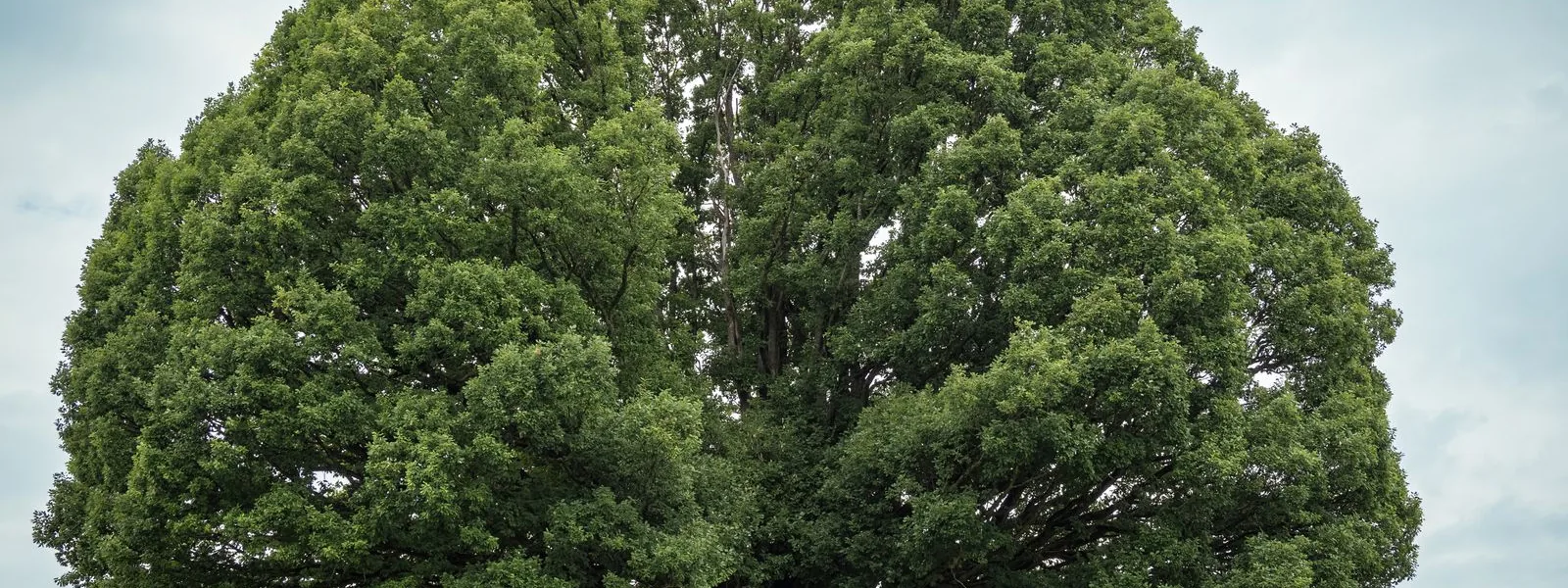
Tree Removal & Trimming in Bowling Green, KY
Safe, careful tree work across Bowling Green and Warren County — taking down the trees that have become dangerous, pruning the ones worth keeping, grinding out stumps, and clearing storm damage. Done the way the trade is meant to be done, on ground that makes tree care its own kind of challenge.
Call (270) 780-3310 for a Free QuoteTwo Sides of the Same Trade
Most tree companies quietly treat removal as the main event and pruning as an afterthought. We do not, because in this market they matter equally — as many people here need a tree kept and cared for as need one taken down, and the two jobs take different skills done to an equally high standard. So they lead this site side by side.
Tree Removal
When a tree is dead, failing, or leaning into a hazard, taking it down is really an exercise in controlling where its weight goes — felled whole where there is room, or dismantled in rigged pieces near a house. It is the answer for standing dead ash, storm-broken trunks, and trees a property simply cannot keep.
Tree Trimming
Careful pruning keeps a tree sound and shapely instead of hurting it — clearing the dead limbs that fall, opening room over the roof and drive, and easing a heavy canopy, with each cut placed to heal. It is what stops a good tree from turning into a removal down the road, and a craft in its own right.
Our Tree Services
Tree Removal
Tree Removal for homes and property in Bowling Green and Warren County.
Tree Trimming
Tree Trimming for homes and property in Bowling Green and Warren County.
Stump Grinding
Stump Grinding for homes and property in Bowling Green and Warren County.
Emergency & Storm Damage
Emergency & Storm Damage for homes and property in Bowling Green and Warren County.
Lot Clearing
Lot Clearing for homes and property in Bowling Green and Warren County.
Tree Health & Disease
Tree Health & Disease for homes and property in Bowling Green and Warren County.
The Ground Under Bowling Green
Tree care here is shaped by what is under the trees. South-central Kentucky is classic karst — a landscape of limestone bedrock, caves, and sinkholes, with only a thin blanket of soil on top of the rock. Trees respond by rooting shallow and wide, because there is nowhere deep to go, and that has a consequence people feel every storm season: a mature tree can be far less firmly anchored than its trunk and canopy suggest. In saturated ground or a hard straight-line wind, whole trees heave and tip here where a deeper-rooted tree elsewhere would only lose a branch.
That single fact runs under almost every job. It is why a leaning tree with soil lifting at its base is treated as urgent, why storm damage in this county tends to mean uprooted trees rather than just broken tops, and why keeping a big tree light, balanced, and free of deadwood up top is among the few real ways to cut the risk of losing it in a blow. Reading the ground, not just the tree, is part of doing this work well in Warren County.
The Ash Trees Are Dying
The other fact shaping local tree work is the emerald ash borer. This introduced beetle kills ash trees by tunneling under the bark and cutting off the flow of water and food, and it has moved through the ash population across the region. An untreated ash in its path is, for practical purposes, a future removal — and once it dies the wood dries and turns brittle fast, so a standing dead ash becomes steadily more dangerous and harder to take down the longer it is left. If you have an ash you want to keep, protecting it is a decision to make early; if you have ash already in decline, the sensible path is removing it before it deteriorates. A great many of the trees coming down across the county right now are exactly these.
An Honest Read, Every Time
The through-line of how we work is simple: tell you the truth about your tree. Removal is a genuine last resort, not a default, and plenty of trees that look finished are not — a storm-torn but sound tree, a declining one with a fixable root problem, an overgrown one that just needs reducing. Where a tree can be saved, saying so is worth more than an easy removal. And where a tree truly has to go, doing it under control — reading the lean, clearing the drop zone, rigging the pieces down near anything that matters — is what the work actually is. We would rather prune a tree once, well, than remove one that had years left, and rather take a dangerous one down cleanly than leave it hanging over your roof.
Storms, and Getting Ahead of Them
Around here the damage comes from wind and ice rather than the deep snow load of the far north — severe summer thunderstorms and straight-line winds, and the weight of ice on limbs in winter. Both put their force on a tree in ways the shallow, rock-limited rooting here has little to push back with, so a real storm tends to leave whole trees uprooted and root plates heaved in its wake. Much of that damage, though, starts with deadwood and weak limbs that a routine prune would have taken out first. Keeping a canopy cleaned and thinned before the season is the cheapest hazard reduction there is — and when a storm does bring a tree down, that work becomes an emergency to handle carefully rather than a saw to grab in a hurry.
What to Expect When You Call
It starts with a look at the tree. We come out, walk the property, check the lean and the root base and how much of the crown is alive, and talk through what you want — then you get a free, no-obligation estimate that lays out the work plainly. No quoting a tree sight-unseen, because the things that decide the job cannot be read from a photo. Whether it turns out to be a removal, a prune, a stump, or storm cleanup, you will hear a straight recommendation, including when the smaller job is the right one.
Serving Bowling Green
We work across Bowling Green. College Hill, Upper East Main and Magnolia Street carry the oldest canopy in the city — silver maples and oaks planted a century ago, now taller than the houses they shade and often directly over a roof or a service drop, which is what turns a removal into a dismantle rather than a fell. Around Fountain Square and the downtown commercial district the tree is rarely the hard part; the access is, because there is nowhere to set a crane and the drop zone is pavement and parked cars. In ShakeRag and St. Joseph the lots are tight and the neighbour's roof is usually inside the fall radius. Out toward Western Kentucky University a lot of the housing is rented, so the deadwood over a walk has often gone unlooked-at for years.
Beyond the city we keep separate pages for Smiths Grove, Oakland, Scottsville and Franklin, and a Warren County overview.
Frequently Asked Questions
Do you give free estimates in Bowling Green?
Yes. Estimates are free and carry no obligation. Because the right call on a tree depends on things you cannot judge from a photo — the lean, the root base, how much is dead, and what is around it — we come out and look, and give you a straight number and an honest recommendation.
What areas do you serve?
We cover Bowling Green — College Hill, Upper East Main, Magnolia Street, ShakeRag and St. Joseph, the streets around Fountain Square and downtown, and the neighborhoods out by Western Kentucky University. We also keep separate pages for Franklin, Scottsville, Smiths Grove, Oakland.
Is it better to remove a tree or trim it?
Whichever the tree actually needs — and the two are equally important here, not a big job and a small one. A dangerous, dead, or failing tree should come out; a great many trees that owners assume are lost just need good pruning and time. We tell you which situation you are in, including when the cheaper answer is the right one.
Why do trees fail so readily around here?
The ground. South-central Kentucky is karst country — limestone bedrock with thin soil over it — so tree roots run shallow and wide instead of deep. That leaves even a big, healthy tree less firmly anchored than it looks, which is why saturated soil or a strong wind can tip or heave one that seemed solid.
Do you handle emergencies and storm damage?
Yes. A tree on the house, a limb hung in the canopy, or a tree suddenly leaning with the ground lifting at its base is urgent work, and it needs to be read before it is cut because storm-loaded wood is under tension. Keep clear of it, call your electric utility first if any wire is involved, and then call us.
Why is there so much dead ash to remove right now?
A small introduced beetle, the emerald ash borer, has spread through the county and is killing untreated ash wherever it goes. Once an ash dies its wood dries and grows brittle, making it more dangerous to take down the longer it stands, so much of the current work is clearing it while that can still be done safely.
Will you top my tree to make it shorter?
No — topping a tree back to stubs is the most harmful thing commonly done to one, and a responsible crew declines it. It starves the tree, invites decay, and forces weak, hazardous regrowth. Where a tree has genuinely outgrown its spot, the right answer is a proper reduction back to sound living limbs, or taking the tree out — not topping.
Do you leave the stump, and do you clean up?
The debris is chipped on site or hauled off, whichever you prefer, and the work area is left tidy. The stump is a separate decision: grinding it out is its own service on its own line, so you choose whether to grind it, and how deep, rather than paying for it by default.
Get a Free Bowling Green Tree Service Quote
Free, no-obligation estimates across Warren County. Tell us about the tree, the stump, or the storm damage.
Call (270) 780-3310