Emergency & Storm Damage Tree Work in Bowling Green, KY
When a storm drops a tree on the house, leaves a limb hung in the canopy, or heaves a big tree into a lean, the work turns from routine to urgent — and it needs to be read carefully before anyone touches it, because storm-loaded wood is under tension and does not behave normally.
Call (270) 780-3310 for a Free Estimate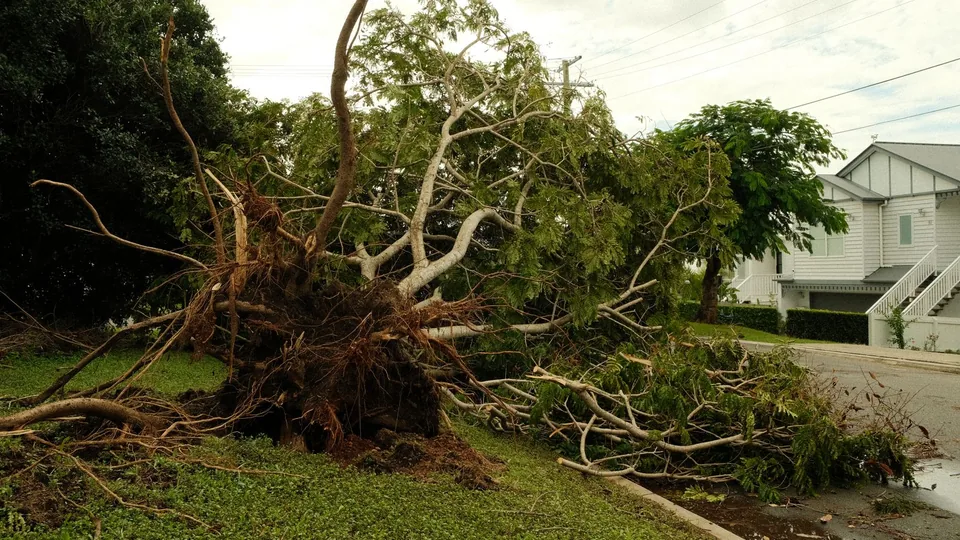
After a bad storm, the yard can look like a disaster and the temptation is to grab a saw and start cutting. That is exactly the wrong instinct. A tree that has partly failed is holding stored energy in ways a standing tree is not — a trunk cracked but not down, a limb bent over and pinned, a root plate half out of the ground — and cutting into that in the wrong place releases the load suddenly and violently. Storm work is dangerous precisely because the failure has already begun and is waiting to finish.
So the first thing that happens on an emergency call is an assessment, not a cut: what is actually loaded, which way it will move when released, what it is resting on, and whether a power line is anywhere in the picture. Only then does the work start, in an order chosen to let the tension out under control. Reading the situation right is most of the job; the cutting is the easy part once the plan is sound.
What Counts as an Emergency
Not everything a storm does is an emergency, and it helps to know the difference. A genuine emergency is a tree or large limb that has landed on a house, a car, or a wire; a tree leaning hard with the soil visibly lifting or cracking on one side of its base; a split or hung-up limb hanging in the canopy over somewhere people go; or a trunk with a fresh crack running through it. These are situations where the next gust, or simply time, finishes the failure.
A leaning tree with a lifted root plate is the classic one to take seriously. When the roots on one side pull out of the ground and the soil mounds up, the anchorage is already gone and the tree is being held by less than it looks — that is a tree on its way down, not a tree with a tilt. Cracked branches lodged overhead, sometimes called hangers or widow-makers, are the other: they can drop with no warning at all.
What to Do Until the Crew Arrives
Keep people and pets away from the base of a leaning tree and out from under any hung limb — the ground the tree would land on, and the cone beneath a lodged branch, are the places to avoid. If a tree is on the house, stay out of the rooms beneath it. If it is resting on or near a wire, treat everything as live and keep well back. Do not try to pull a hanging limb down, and do not climb up to cut anything.
The one call that comes before ours in some situations is the electric utility. A tree resting against a live line belongs to them before anyone else — clearing conductors is a trade of its own, and neither a tree crew nor, absolutely, a homeowner should be up in a tree that is touching a primary line. Once the power side is safe, the rest is tree work.
Making It Safe, Then Making It Right
Storm work often happens in two stages. The first is making the situation safe: getting the immediate hazard off the house, down from the canopy, or stabilized so it cannot move, which is the urgent part. The second, once the danger is gone, is the ordinary work of finishing the removal or repair on a normal footing — cutting up and clearing the debris, taking down what is beyond saving, and pruning back the tree that took damage but can recover.
Not every storm-hit tree has to come out. A tree that lost a limb but kept its main structure can often be cleaned up and pruned back to a sound form; one with a cracked leader or a failed root plate usually cannot. Part of the after-storm job is telling those apart honestly, so a tree that could have been saved is not removed in a panic, and a tree that is quietly finished is not left standing over the house.
Once the immediate danger is handled, a storm job becomes ordinary removal and pruning — and much storm damage traces back to deadwood a routine prune would have taken out first.
What’s Included
- On-site hazard assessment before any cutting begins
- Trees and limbs removed from roofs, vehicles, and other structures
- Leaning trees with lifted root plates taken down under control
- Hung and cracked limbs cleared from the canopy
- Debris cut up and hauled, with coordination alongside the utility for line hazards
Why It Matters in Bowling Green
Warren County takes its tree damage from wind and ice rather than heavy snow — severe thunderstorms and straight-line winds in the warm months, and ice loading that overloads limbs in winter. Both put force on a tree in ways a shallow, rock-limited root system on karst ground is poorly set up to resist, which is why a big storm here tends to produce uprooted trees and heaved root plates, not just broken tops. Standing dead ash left by the borer adds a whole population of brittle trees primed to shed limbs the moment the wind picks up, and those are often the first calls after a front moves through.
Frequently Asked Questions
A tree just fell on my house — what should I do first?
Get everyone out of the rooms beneath the tree and stay clear of the area. If the tree is touching any wire, treat it as live and call your electric utility before anything else. Do not climb up or try to cut it yourself — storm-loaded wood is under tension and moves unpredictably when cut. Then call for an assessment so the tree can be taken off the structure under control.
How do I know if a leaning tree is an emergency?
Look at the base. If the soil is lifting, cracking, or mounding on one side, the root plate is failing and the tree is on its way down — that is urgent. A tree that has always leaned and shows no fresh ground disturbance is usually stable. New lean after a storm, especially with a heaving root plate, should be treated as an emergency and kept clear of.
Should I try to pull down a hanging limb myself?
No. A cracked or lodged limb hanging in the canopy — a hanger or widow-maker — can drop without warning and weighs far more than it looks. Pulling on it or standing under it is how people get seriously hurt. Keep the area beneath it clear and let a crew take it down from a safe position, often with a lift or by rigging.
There is a tree on the power line. Who do I call?
Your electric utility, first and always. Anything touching a primary electrical line is utility line work — a specialized job around live conductors, and never one for a tree crew or a homeowner to take on. Once they have made the wire safe, the rest is ordinary tree work.
Does a storm-damaged tree always have to be removed?
No. A tree that lost a limb but kept its trunk and main structure can often be pruned back to a sound, safe form and go on for years. Removal is the answer when the trunk is cracked through, a main leader has failed, or the root plate has lifted. Part of the after-storm assessment is telling those two apart rather than removing in a panic.
Why is cutting storm-damaged wood so dangerous?
Because the wood is already under load. A bent, pinned, or partly-broken limb is storing energy like a spring, and cutting it in the wrong place lets that energy go all at once. Standing dead and storm-cracked trees are brittle on top of that. It is work that depends on reading the tension correctly before the saw ever touches the wood.
Other Services
Free Emergency & Storm Damage Estimate in Bowling Green
Free, no-obligation estimates across Warren County. Tell us about the tree, the stump, or the storm damage.
Call (270) 780-3310